Have a fabulous 2012

FOR PHOTOS: PLEASE ASK FIRST, I WOULD APPRECIATE THE COURTESY OF BEING ASKED!

FOR PHOTOS: PLEASE ASK FIRST, I WOULD APPRECIATE THE COURTESY OF BEING ASKED!
Gaga: Rest in Peace (b.2002 - d.2010)

Wednesday, September 11, 2013

Master Muhammad Ayub: An Inspirational Teacher


Mohammad Ayub has been teaching unprivileged children for more than two decades. Sitting under a tree in a park in Sector F-6, ‘Master Ayub’ teaches around 280 students every day, free of cost.

Ayub, 52, came to Islamabad in 1976 from Mandi Bahauddin and started working at the Fire Service as a fire in-charge. “Our youth is what will take us forward. In my spare time, I started teaching children from the street,”

Ayub convinced local shopkeepers that education was vital and every child has a right to go to school. Soon, the shopkeepers started sending child beggars to him along with the child helpers in their shops.


He started by gathering children from F-6. “I’d give them stationary and notebooks. Soon I found out that people from the market had started sending their children to me,” he said.


Over the twenty-eight years, newspapers, non-governmental organizations, and even members of the international press, have knocked on Master Ayub’s door. Yet, his plans to build two rooms for his students have seen no support.


“Many organizations even come and arrange events for the children, and the media is invited to cover these activities,” says Ayub. “However, they all make tall claims and leave. No one has offered to build, or assist in building, a two-room shelter for these kids.”


To realize his vision, Ayub has been cutting costs and saving from his own pocket to build the rooms in the slum area right across the school. He bought the land seven years ago and has slowly started the construction.

Today, the school serves as a safe place for many. There is a computer lab, a classroom, and a library that holds over 600 books.

“I have started saving already to construct a stronger roof that will protect the kids from severe weather conditions especially rain and chilly winter evenings. I need Rs25, 000 to shelter this building and avoid further damage, and I will do it,” he says confidently.

Source: here 
For further reading, click here.
Facebook page on Master Ayub is here. 
A news report on Ayub on Youtube, here.

Countdown: Iran, Israel and the Threat of a Military Strike


Imperial by Design - John Mearsheimer


Tuesday, September 10, 2013

The Spaghettification of U.S. Foreign Policy: How Many Cases Can Obama Make for War with Syria?


This is what desperation looks like.
With the White House selling an increasingly skeptical Congress and public on airstrikes in Syria, President Obama and his lieutenants have rolled out just about every possible argument to marshal support on the Hill ahead of Obama's big Syria speech on Tuesday evening. It's akin to throwing spaghetti at the wall and seeing what sticks.
Is Syria's use of chemical weapons a threat to U.S. national security? You bet, says National Security Advisor Susan Rice. Does the United States have a moral obligation to enforce international norms against chemical weapons use? It certainly does, says White House Chief of Staff Denis McDonough. Does the current crisis bear a frightening resemblance to Munich circa 1938? Most certainly, says Secretary of State John Kerry. And is there a need to send a strong message to the mullahs in Tehran about their nuclear ambitions? Damn straight, says U.N. Ambassador Samantha Power.
Welcome to the spaghettification of U.S. foreign policy.
A case in point: the appearance Sunday of McDonough, the White House chief of staff, on NBC's Meet the Press. First McDonough noted that Congress's decision on Syria "will be listened to very clearly in Damascus, but not just in the Damascus -- also in Tehran ... and among Lebanese Hezbollah." Three questions later, the proposal for strikes was all about the importance of discouraging chemical weapons use. "This is a targeted, limited consequential action to reinforce this prohibition against these weapons that unless we reinforce this prohibition, will proliferate and threaten our friends and our allies." Lest the administration be accused of short-sightedness, McDonough was quick to emphasize that strikes would hasten the arrival of a long-term solution to the conflict. "And our effort to target this effectively will only help that political diplomatic resolution."


Got all that? To recap, a limited U.S. military engagement will prevent the use of chemical weapons elsewhere, encourage a political resolution to the conflict, and discourage Iran's pursuit of nuclear weapons.
But wait, that's not all. "Israel is at risk, Jordan is at risk, Turkey is at risk, the region is at risk," Kerry proclaimed on Meet the Press the prior week. Then, on Saturday, Kerry went so far as to say that "this is our Munich moment" -- a reference to the 1938 deal in Munich that ceded parts of Czechoslovakia to Nazi Germany in an attempt to avoid war. According to the White House, however, these risks aren't limited to bloodshed inside Syria. An unpunished Assad regime, Rice, the national security advisor, argued on Monday, puts "Americans at risk of chemical attacks, targeted at our soldiers and diplomats in the region and potentially our citizens at home" (McDonough made a similar point on the Sunday talk shows).
Not only is the White House raising the specter of the Holocaust, it is also warning that Assad's chemical weapons use threatens the U.S. homeland.
The administration's case has evolved significantly since John Kerry first sketched out the rationale for carrying out a punitive strike on Syria in humanitarian terms. "What we saw in Syria last week should shock the conscience of the world," Kerry said on Aug. 26. "It defies any code of morality. Let me be clear. The indiscriminate slaughter of civilians, the killing of women and children and innocent bystanders by chemical weapons is a moral obscenity. By any standard, it is inexcusable." That moral outrage remains -- as when Rice said Monday that "as a parent I cannot look at those pictures, those little children laying on the ground ... and not think of my own two kids" -- but in selling the argument to an unconvinced Congress, every argument possible has gotten tacked on as well.

 The White House, of course, would contend that, taken together, all these arguments add up to a compelling case for intervening militarily in Syria. Its critics would contend that they are emblematic of a muddled rationale for war. Perhaps by Tuesday, when Obama addresses the nation he hopes to once more lead into conflict, the White House will have thrown enough spaghetti against the wall to have found an argument that sticks.

Source

Re Syria: Everyone Take a Deep Breath and Relax | Stephen M. Walt | Stephen M. Walt

Re Syria: Everyone Take a Deep Breath and Relax | Stephen M. Walt | Stephen M. Walt

2013 Strategy Conference Keynote- John Mearsheimer, University of Chicago


John Mearsheimer on drone attacks, United States "grand -strategy", rise of China peacefully, India as an ally, great power politics, End of History,  nation-building by the US and on army as a machine that kills and wins war not meant for shaping humanitarian environment.

Great speech.

Levi's ® Presents: Zoe Viccaji & Strings "Bichra Yaar"


Young The Giant - Sameer Gadhia

"Tribute To The Legends" Titliyaan Yaadon Ki Urrti Jayen ( Strings ) "Up...


Titiliyaan Yadoon Ki - Strings (A Pakistani Song)


Sunday, September 8, 2013

Conversations With History - Francis Fukuyama


Fukuyama on the modern middle class

Over the past decade, Turkey and Brazil have been widely celebrated as star economic performers—emerging markets with increasing influence on the international stage. Yet, over the past three months, both countries have been paralyzed by massive demonstrations expressing deep discontent with their governments' performance. What is going on here, and will more countries experience similar upheavals?

The theme that connects recent events in Turkey and Brazil to each other, as well as to the 2011 Arab Spring and continuing protests in China, is the rise of a new global middle class. Everywhere it has emerged, a modern middle class causes political ferment, but only rarely has it been able, on its own, to bring about lasting political change. Nothing we have seen lately in the streets of Istanbul or Rio de Janeiro suggests that these cases will be an exception.

In Turkey and Brazil, as in Tunisia and Egypt before them, political protest has been led not by the poor but by young people with higher-than-average levels of education and income. They are technology-savvy and use social media like Facebook and Twitter to broadcast information and organize demonstrations. Even when they live in countries that hold regular democratic elections, they feel alienated from the ruling political elite.

n the case of Turkey, they object to Prime Minister Recep Tayyip Erdoğan's development-at-all-cost policies and authoritarian manner. In Brazil, they object to an entrenched and highly corrupt political elite that has showcased glamour projects like the World Cup and Rio Olympics while failing to provide basic services like health and education to the general public. For them, it is not enough that Brazil's president, Dilma Rousseff, was herself a left-wing activist jailed by the military regime during the 1970s and leader of the progressive Brazilian Workers Party. In their eyes, that party itself has been sucked into the maw of the corrupt "system," as revealed by a recent vote-buying scandal, and is now part of the problem of ineffective and unresponsive government.

The business world has been buzzing about the rising "global middle class" for at least a decade. A 2008 Goldman Sachs GS +0.31% report defined this group as those with incomes between $6,000 and $30,000 a year and predicted that it would grow by some two billion people by 2030. A 2012 report by the European Union Institute for Security Studies, using a broader definition of middle class, predicted that the number of people in that category would grow from 1.8 billion in 2009 to 3.2 billion in 2020 and 4.9 billion in 2030 (out of a projected global population of 8.3 billion). The bulk of this growth will occur in Asia, particularly China and India. But every region of the world will participate in the trend, including Africa, which the African Development Bank estimates already has a middle class of more than 300 million people.

Corporations are salivating at the prospect of this emerging middle class because it represents a vast pool of new consumers. Economists and business analysts tend to define middle-class status simply in monetary terms, labeling people as middle class if they fall within the middle of the income distribution for their countries, or else surpass some absolute level of consumption that raises a family above the subsistence level of the poor.

But middle-class status is better defined by education, occupation and the ownership of assets, which are far more consequential in predicting political behavior. Any number of cross-national studies, including recent Pew surveys and data from the World Values Survey at the University of Michigan, show that higher education levels correlate with people's assigning a higher value to democracy, individual freedom and tolerance for alternative lifestyles. Middle-class people want not just security for their families but choices and opportunities for themselves. Those who have completed high school or have some years of university education are far more likely to be aware of events in other parts of the world and to be connected to people of a similar social class abroad through technology.

Families who have durable assets like a house or apartment have a much greater stake in politics, since these are things that the government could take away from them. Since the middle classes tend to be the ones who pay taxes, they have a direct interest in making government accountable. Most importantly, newly arrived members of the middle class are more likely to be spurred to action by what the late political scientist Samuel Huntington called "the gap": that is, the failure of society to meet their rapidly rising expectations for economic and social advancement. While the poor struggle to survive from day to day, disappointed middle-class people are much more likely to engage in political activism to get their way.

This dynamic was evident in the Arab Spring, where regime-changing uprisings were led by tens of thousands of relatively well-educated young people. Both Tunisia and Egypt had produced large numbers of college graduates over the past generation. But the authoritarian governments of Zine El Abidine Ben Ali and Hosni Mubarak were classic crony-capitalist regimes, in which economic opportunities depended heavily on political connections. Neither country, in any event, had grown fast enough economically to provide jobs for ever-larger cohorts of young people. The result was political revolution.

None of this is a new phenomenon. The French, Bolshevik and Chinese Revolutions were all led by discontented middle-class individuals, even if their ultimate course was later affected by peasants, workers and the poor. The 1848 "Springtime of Peoples" saw virtually the whole European continent erupt in revolution, a direct product of the European middle classes' growth over the previous decades.

While protests, uprisings and occasionally revolutions are typically led by newly arrived members of the middle class, the latter rarely succeed on their own in bringing about long-term political change. This is because the middle class seldom represents more than a minority of the society in developing countries and is itself internally divided. Unless they can form a coalition with other parts of society, their movements seldom produce enduring political change.

Thus the young protesters in Tunis or in Cairo's Tahrir Square, having brought about the fall of their respective dictators, failed to follow up by organizing political parties that were capable of contesting nationwide elections. Students in particular are clueless about how to reach out to peasants and the working class to create a broad political coalition. By contrast, the Islamist parties—Ennahda in Tunisia and the Muslim Brotherhood in Egypt—had a social base in the rural population. Through years of political persecution, they had become adept at organizing their less-educated followers. The result was their triumph in the first elections held after the fall of the authoritarian regimes.

A similar fate potentially awaits the protesters in Turkey. Prime Minister Erdoğan remains popular outside of the country's urban areas and has not hesitated to mobilize members of his own Justice and Development Party (AKP) to confront his opponents. Turkey's middle class, moreover, is itself divided. That country's remarkable economic growth over the past decade has been fueled in large measure by a new, pious and highly entrepreneurial middle class that has strongly supported Erdoğan's AKP.

This social group works hard and saves its money. It exhibits many of the same virtues that the sociologist Max Weber associated with Puritan Christianity in early modern Europe, which he claimed was the basis for capitalist development there. The urban protesters in Turkey, by contrast, remain more secular and connected to the modernist values of their peers in Europe and America. Not only does this group face tough repression from a prime minister with authoritarian instincts, it faces the same difficulties in forging linkages with other social classes that have bedeviled similar movements in Russia, Ukraine and elsewhere.

The situation in Brazil is rather different. The protesters there will not face tough repression from President Rousseff's administration. Rather, the challenge will be avoiding co-optation over the long term by the system's entrenched and corrupt incumbents. Middle-class status does not mean that an individual will automatically support democracy or clean government. Indeed, a large part of Brazil's older middle class was employed by the state sector, where it was dependent on patronage politics and state control of the economy. Middle classes there, and in Asian countries like Thailand and China, have thrown their support behind authoritarian governments when it seemed like that was the best means of securing their economic futures.

Brazil's recent economic growth has produced a different and more entrepreneurial middle class rooted in the private sector. But this group could follow its economic self-interest in either of two directions. On the one hand, the entrepreneurial minority could serve as the basis of a middle-class coalition that seeks to reform the Brazilian political system as a whole, pushing to hold corrupt politicians accountable and to change the rules that make client-based politics possible. This is what happened in the U.S. during the Progressive Era, when a broad middle-class mobilization succeeded in rallying support for civil-service reform and an end to the 19th-century patronage system. Alternatively, members of the urban middle class could dissipate their energies in distractions like identity politics or get bought off individually by a system that offers great rewards to people who learn to play the insiders' game.

There is no guarantee that Brazil will follow the reformist path in the wake of the protests. Much will depend on leadership. President Rousseff has a tremendous opportunity to use the uprisings as an occasion to launch a much more ambitious systemic reform. Up to now she has been very cautious in how far she was willing to push against the old system, constrained by the limitations of her own party and political coalition. But just as the 1881 assassination of President James A. Garfield by a disappointed office-seeker became the occasion for wide-ranging clean-government reforms in the U.S., so too could Brazil use the occasion of the protests to shift onto a very different course today.

The global economic growth that has taken place since the 1970s—with a quadrupling of global economic output—has reshuffled the social deck around the world. The middle classes in the so-called "emerging market" countries are larger, richer, better educated and more technologically connected than ever before.

This has huge implications for China, whose middle-class population now numbers in the hundreds of millions and constitutes perhaps a third of the total. These are the people who communicate by Sina Weibo—the Chinese Twitter—and have grown accustomed to exposing and complaining about the arrogance and duplicity of the government and Party elite. They want a freer society, though it is not clear they necessarily want one-person, one-vote democracy in the near term.

This group will come under particular stress in the coming decade as China struggles to move from middle- to high-income status. Economic growth rates have already started to slow over the past two years and will inevitably revert to a more modest level as the country's economy matures. The industrial job machine that the regime has created since 1978 will no longer serve the aspirations of this population. It is already the case that China produces some six million to seven million new college graduates each year, whose job prospects are dimmer than those of their working-class parents. If ever there was a threatening gap between rapidly rising expectations and a disappointing reality, it will emerge in China over the next few years, with vast implications for the country's stability.

There, as in other parts of the developing world, the rise of a new middle class underlies the phenomenon described by Moises Naím of the Carnegie Endowment as the "end of power." The middle classes have been on the front lines of opposition to abuses of power, whether by authoritarian or democratic regimes. The challenge for them is to turn their protest movements into durable political change, expressed in the form of new institutions and policies. In Latin America, Chile has been a star performer with regard to economic growth and the effectiveness of its democratic political system. Nonetheless, recent years have seen an explosion of protests by high-school students who have pointed to the failings of the country's public education system.

The new middle class is not just a challenge for authoritarian regimes or new democracies. No established democracy should believe it can rest on its laurels, simply because it holds elections and has leaders who do well in opinion polls. The technologically empowered middle class will be highly demanding of their politicians across the board.

The U.S. and Europe are experiencing sluggish growth and persistently high unemployment, which for young people in countries like Spain reaches 50%. In the rich world, the older generation also has failed the young by bequeathing them crushing debts. No politician in the U.S. or Europe should look down complacently on the events unfolding in the streets of Istanbul and São Paulo. It would be a grave mistake to think, "It can't happen here."
—Mr. Fukuyama is a senior fellow at Stanford University's Freeman Spogli Institute for International Studies and the author of "The Origins of Political Order: From Prehuman Times to the French Revolution."

Fukuyama writes regularly here.

Head to Head - What is wrong with Islam today?

Saturday, September 7, 2013

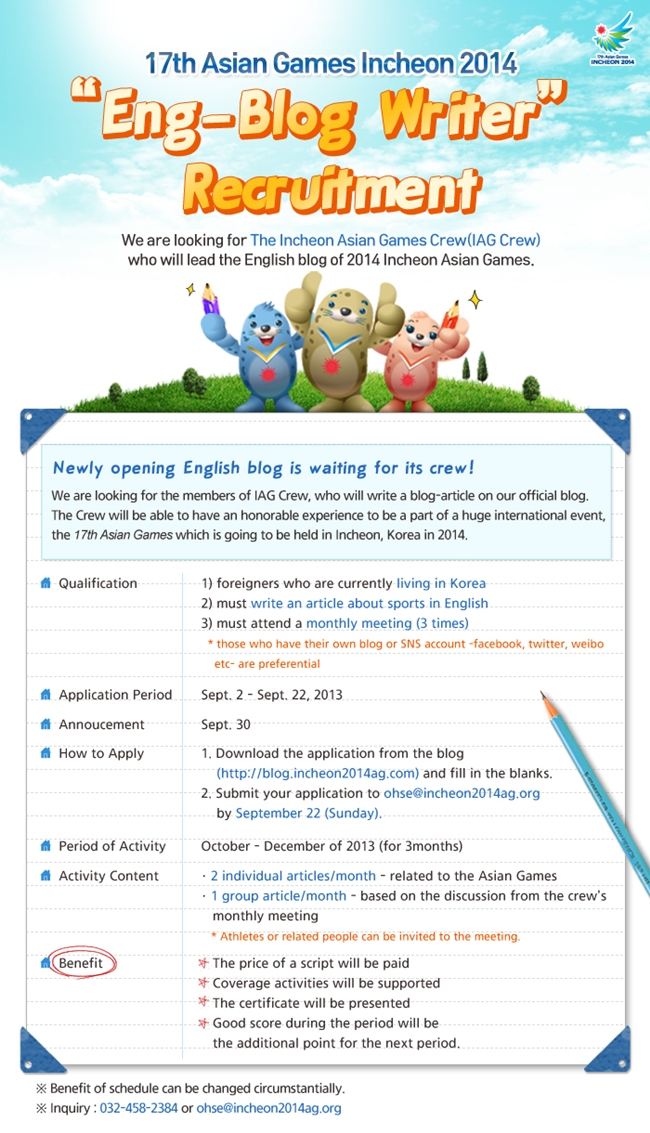
Recriutment: Asian Games Incheon - Blog-Writing Crew

Poster Credit: 2014 Incheon Asian Games Organizing Committee
The 17th Incheon Asian Games Crew 2014 is looking for writers for its IAG Crew to lead the English-language blog of the 2014 Incheon Asian Games.

Crew members will be asked to write articles about the sports events in English to promote the 2014 Incheon Asian Games and its events. Foreign residents who are currently living in Korea and are able to attend three meetings per month are eligible to apply. Applications will be accepted from September 2 until September 22, 2013.

For more information and to download the application form, please visit the IAG blog (http://blog.incheon2014ag.com).
More info

☞Blog: http://blog.incheon2014ag.com (English)
☞Inquiries: +82-32-458-2384 or ohse@incheon2014ag.org
Courtesy of 2014 Incheon Asian Games Organizing Committee

Thursday, September 5, 2013

Conversations with History: Howard Zinn on America's Good War

OKI'S MOVIE TRAILER

Oki's Movie at Venice Film Festival (옥희의영화)


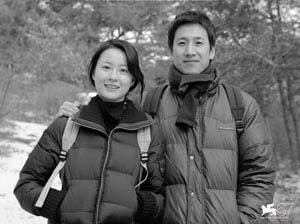
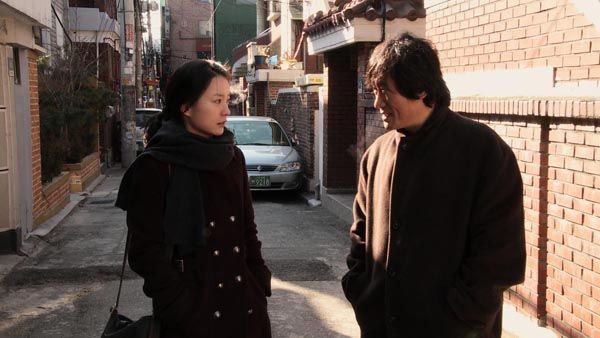
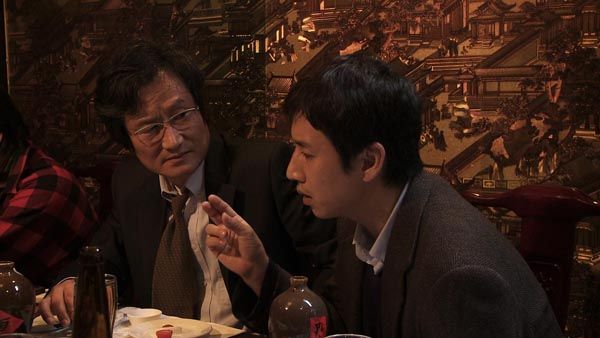
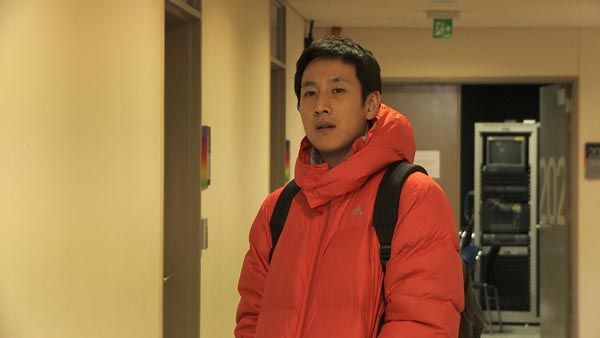
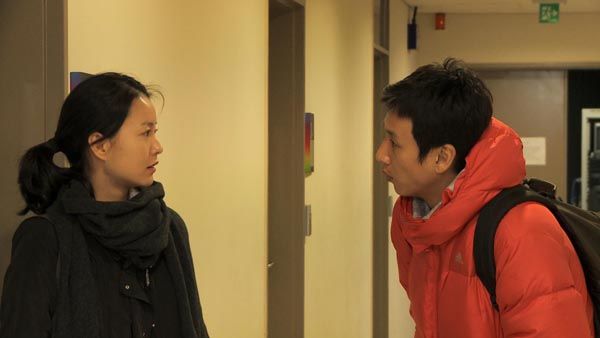
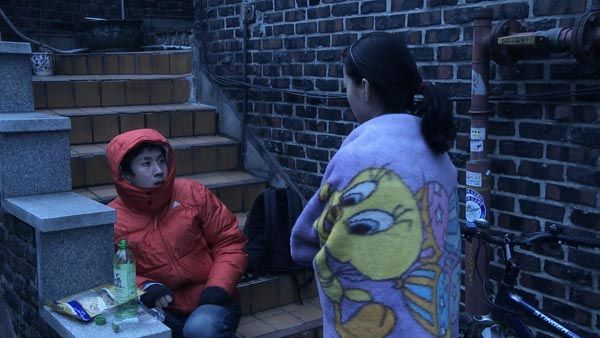
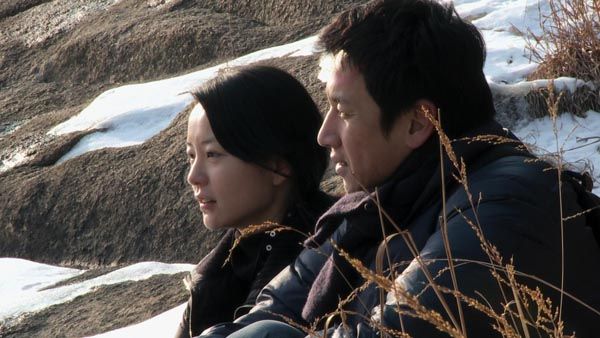
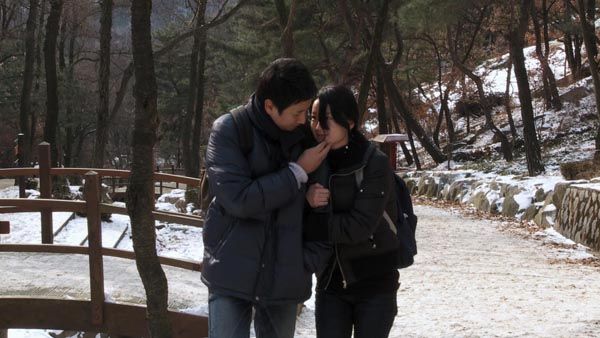
Lee Seon-kyun (Pasta) and Jung Yumi (Que Sera Sera) are starring in a film together, called Oki’s Movie. It comes from director Hong Sang-soo, who won a prize at Cannes earlier this year for his film Ha Ha Ha.

This film is invited to the 67th Venice International Film Festival, into its competitive “Orizzonti” section. According to the festival, it is “the Venice International Film Festival’s most innovative section, a veritable documentary array of contemporary cinema in all its forms of expression.”

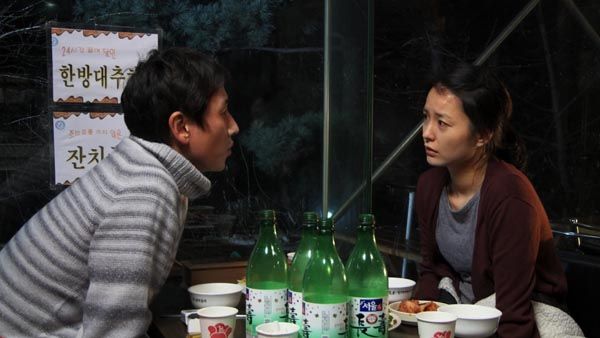
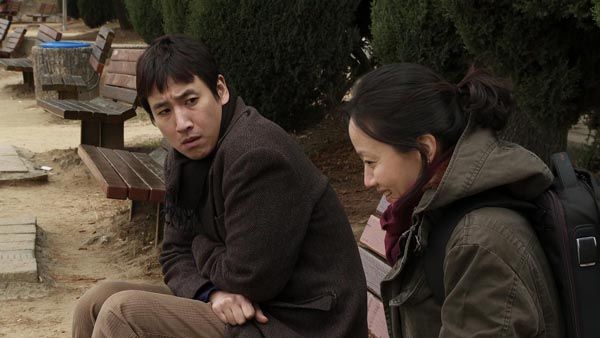
The movie stars Jung Yumi as the titular Oki (more traditionally spelled Ok-hee), an ordinary film student. Her classmate Jin-gu (Lee Seon-kyun) likes her and confesses his feelings for her in one of the stills below (he follows her all the way up the mountainside and gets drunk on makgulli), but her response is a vague “Thank you so liking me so much.”

Jin-gu decides to try again at Christmas dinner and waits outside her place, but she doesn’t show up till dawn. Finding that he has spent the night there, she scolds him for waiting all this while.

Oki’s Movie is scheduled to release in Korea on September 16.

Source 


Wednesday, September 4, 2013

Conversations With History - John Mearsheimer & Steve Walt

Malala Inaugurates Europe's Biggest Library


The 16-year-old, flown from Pakistan to the UK for emergency treatment in October after being shot in the head by a Taliban gunman, told a 1,000-strong crowd outside the library that even "one book, one pen, one child and one teacher can change the world".
"We must speak up for the children of Pakistan, India and Afghanistan who are suffering from terrorism, poverty, child labour and child trafficking," she said. "Let us help them through our voice, action and charity. Lets us help them to read books and go to school."

Listen, watch, read more here.

List of "Korean Food" or HANSHIK that is HALAL in Korea


I thought I should put up a list of Korean food or Hanshik (한식) that Muslims in particular can eat at "any restaurant" across the length and breadth of South Korea. This list includes dishes that are served with seafood in it or are simply composed of rice and vegetables or noodles and vegetables. By the way, just to be on the safe side you can tell restaurant manager that: Gogi um-mou-go yeo! (I don't eat meat/ 저는 고기 안 먹어요).

You do not have to look around the halal food restaurants because it is obviously difficult. NOT all neighborhoods offers halal food . It's better that you stick to Korean food that falls within the confines of halal food and there is plenty to choose from. I've short-listed Zen Kimchi's list  here and have made some additions as well.

Korea Tourism website has a very informative page on Korean food so check that out here.

Main Dishes being served in a Korean Restaurant 

Buddhist Temple Cuisine (entirely vegetarian)
Jeon (Pancake) or  Pajeon (Green Onion Pancake)
Yachae Gimbap (Seaweed Rice Rolls)
Bibimbap (Mixed Rice and Vegetables)
O-jingo Bokkeum Bap (Spicy Squid Stew served with Rice)
Boribap (Mixed Barley Rice and Vegetables)
Sundubu Jjigae (Soft Tofu Stew)
Haemul Sundubu Jjigae
Juk (porridges of differnt kinds), Jeonbok Juk (Rice Porridge with Abalone)
Kimchi Jjim (Braised Kimchi with Tofu) 
Lotteria’s Shrimp Burger 
Lotteria's Squid Burger in spicy flavour 
Sae-u Kang (Shrimp Flavored “Fries”)
Doenjang Jjigae (Fermented Bean Paste Stew)
Ddeokbokki (Chewy Rice Cakes in Spicy Sauce)
Mae-eunTang (Spicy Fish Soup)
Nakji Bokkeum (Stir-fried Baby Octopus, I got very sick eating this and then never ate it again.)
Dolsot Yachae Bibimbap (Mixed Rice and Vegetables in a Sizzling Stone Pot)
Dolsot Chamchi Bibimbap (Mixed rice with tuna and vegetables in a stone pot)
Saengseon Gui (Korean-style Grilled Fish served with rice ad side dishes)
Hui Mul (Korean style Sashimi)
Haemultang (Seafood Soup)
Naengmyeon (Chilled Noodles)


Side Dishes (Banchan), Desserts, Snacks or Drinks

Myeolchi Bokkeum (Stir-fried Anchovies)
Odeng/Eomuk (Street-side Fish Noodles)
Hoddeok (Stuffed Street-side Pastries)
Beondegi (Silkworm Larvae)
Golbaengi (Sea Snails)
Jangeo Gui (Grilled Eel)
Sae-u Sogeum Gui (Salt Grilled Shrimp)
Deodeok Root
BindaeDdeok (Mung Bean Pancake)
Ttuekim
Dotorimuk (Acorn Jelly)
Patbingsu (Shaved Ice and Red Bean Treat)
Gyeran Jjim (Steamed Egg)
Corn Ice Cream
Songpyeon (Stuffed Chewy Rice Cakes)
Shikhye (Sweet Rice Punch)
Any product with Green Tea in it
Baek Kimchi (White Cabbage Kimchi)
Mul Kimchi (Water Kimchi)
Oi Sobaegi (Stuffed Cucumber Kimchi)
Ggakdugi (Cubed Radish Kimchi)
Sae-u Jeot (Salted Tiny Shrimp)
Myeongran Jeot (Salted Pollack Roe)
Ssamjang (Mixed Soybean and Pepper Paste)
Yachae Ramyeon (Vegetable Ramen Noodles)
BungeoBbang (Goldfish-shaped Stuffed Pastry)
GeJang (Raw Fermented Crabs)

Friday, August 30, 2013

Four Korean Women Scale Trango Tower in Skardu


Four Korean women have returned to Skardu after scaling the Trango Tower (6,239 metres high), also called Nameless Tower.
According to Hamid Hussain, a representative of the expedition organisers, Mi Sun Chae, Mi Sun Han and Jin Ah Lee led by Jum Sook Kim began to climb the Trango Tower, a very large, pointed and rather symmetrical rock spire, on July 26 but had to return to the base camp on August 4 due to bad weather.
They left the rock spire on August 8 after the weather cleared and succeeded in reaching the summit on the August 12 morning.
Earlier in 2006, 20 Slovenian women had climbed the peak.
“We used the German route, the most challenging, to reach the summit,” Ms Kim told Dawn.
On average, all four Korean women have the 20 years rock climbing experience.
Ms Kim, 47, is a noted climbing instructor in Korea.
She began to climb rocks in 1989 and surmounted several peaks in the Alps, the US, Canada and India.
Also, Ms Kim won the first prize at Korean Sport Climbing Games in 1993 and the second prize at X-Games in 1999.
Mi Chae, 41, works at a shop in Korea.
She won the first prize at the Korean Ice Climbing Games in 2000, 2001 and 2002, and second at the Korean Aid Climbing Festival in 2007.
Until now, Ms Chae has scaled El Capitan at Yosemite National Park in the US, Mt McKinley in Alaska, Grand Jorasse in the Alps and Mt Fitzroy in Argentina.
Ms Han, 41, is a freelancer and climbing instructor.
She has won the first prize at the Korean Aid Climbing Games in 2010 and second at the Korean Ice Climbing Games in 2009 and 2011.
Ms Han has surmounted rocks in the area of Blue Mountains in Australia, El Capitan at Yosemite National Park in America, the central Peak of Paine Chile Pantagonia and Mt. Fitzroy in Argentina in, Mount Blanc and Aiguille du Midi in the Alps until now.Ms Lee, 38, is the youngest member of the expedition.
A nurse by profession, she began her climbing career in 1998 and won the first prize at the Korean Summer Dry Tooling Games in 2011, second at Korean Ice Climbing Games in 2008 and Korean Summer Dry Tooling Games in 2012, third at Korean Bouldering Games in 2005 and Korean Ice Climbing Games in 2006, and fourth at the Korean Sport Climbing Games in 2005.
The four climbers are carrying out charity work in Baltistan for the poor people.
“We are planning to send some clothes, shoes and other relief items to Pakistani poor people once a year. We hope that our project continue for a long time,” Ms Kim said.