

Tuesday, September 10, 2013

Sunday, September 8, 2013
Conversations With History - Francis Fukuyama
Fukuyama on the modern middle class
Over the past decade, Turkey and Brazil have been widely celebrated as star economic performers—emerging markets with increasing influence on the international stage. Yet, over the past three months, both countries have been paralyzed by massive demonstrations expressing deep discontent with their governments' performance. What is going on here, and will more countries experience similar upheavals?
The theme that connects recent events in Turkey and Brazil to each other, as well as to the 2011 Arab Spring and continuing protests in China, is the rise of a new global middle class. Everywhere it has emerged, a modern middle class causes political ferment, but only rarely has it been able, on its own, to bring about lasting political change. Nothing we have seen lately in the streets of Istanbul or Rio de Janeiro suggests that these cases will be an exception.
In Turkey and Brazil, as in Tunisia and Egypt before them, political protest has been led not by the poor but by young people with higher-than-average levels of education and income. They are technology-savvy and use social media like Facebook and Twitter to broadcast information and organize demonstrations. Even when they live in countries that hold regular democratic elections, they feel alienated from the ruling political elite.
n the case of Turkey, they object to Prime Minister Recep Tayyip Erdoğan's development-at-all-cost policies and authoritarian manner. In Brazil, they object to an entrenched and highly corrupt political elite that has showcased glamour projects like the World Cup and Rio Olympics while failing to provide basic services like health and education to the general public. For them, it is not enough that Brazil's president, Dilma Rousseff, was herself a left-wing activist jailed by the military regime during the 1970s and leader of the progressive Brazilian Workers Party. In their eyes, that party itself has been sucked into the maw of the corrupt "system," as revealed by a recent vote-buying scandal, and is now part of the problem of ineffective and unresponsive government.
The business world has been buzzing about the rising "global middle class" for at least a decade. A 2008 Goldman Sachs GS +0.31% report defined this group as those with incomes between $6,000 and $30,000 a year and predicted that it would grow by some two billion people by 2030. A 2012 report by the European Union Institute for Security Studies, using a broader definition of middle class, predicted that the number of people in that category would grow from 1.8 billion in 2009 to 3.2 billion in 2020 and 4.9 billion in 2030 (out of a projected global population of 8.3 billion). The bulk of this growth will occur in Asia, particularly China and India. But every region of the world will participate in the trend, including Africa, which the African Development Bank estimates already has a middle class of more than 300 million people.
Corporations are salivating at the prospect of this emerging middle class because it represents a vast pool of new consumers. Economists and business analysts tend to define middle-class status simply in monetary terms, labeling people as middle class if they fall within the middle of the income distribution for their countries, or else surpass some absolute level of consumption that raises a family above the subsistence level of the poor.
But middle-class status is better defined by education, occupation and the ownership of assets, which are far more consequential in predicting political behavior. Any number of cross-national studies, including recent Pew surveys and data from the World Values Survey at the University of Michigan, show that higher education levels correlate with people's assigning a higher value to democracy, individual freedom and tolerance for alternative lifestyles. Middle-class people want not just security for their families but choices and opportunities for themselves. Those who have completed high school or have some years of university education are far more likely to be aware of events in other parts of the world and to be connected to people of a similar social class abroad through technology.
Families who have durable assets like a house or apartment have a much greater stake in politics, since these are things that the government could take away from them. Since the middle classes tend to be the ones who pay taxes, they have a direct interest in making government accountable. Most importantly, newly arrived members of the middle class are more likely to be spurred to action by what the late political scientist Samuel Huntington called "the gap": that is, the failure of society to meet their rapidly rising expectations for economic and social advancement. While the poor struggle to survive from day to day, disappointed middle-class people are much more likely to engage in political activism to get their way.
This dynamic was evident in the Arab Spring, where regime-changing uprisings were led by tens of thousands of relatively well-educated young people. Both Tunisia and Egypt had produced large numbers of college graduates over the past generation. But the authoritarian governments of Zine El Abidine Ben Ali and Hosni Mubarak were classic crony-capitalist regimes, in which economic opportunities depended heavily on political connections. Neither country, in any event, had grown fast enough economically to provide jobs for ever-larger cohorts of young people. The result was political revolution.
None of this is a new phenomenon. The French, Bolshevik and Chinese Revolutions were all led by discontented middle-class individuals, even if their ultimate course was later affected by peasants, workers and the poor. The 1848 "Springtime of Peoples" saw virtually the whole European continent erupt in revolution, a direct product of the European middle classes' growth over the previous decades.
While protests, uprisings and occasionally revolutions are typically led by newly arrived members of the middle class, the latter rarely succeed on their own in bringing about long-term political change. This is because the middle class seldom represents more than a minority of the society in developing countries and is itself internally divided. Unless they can form a coalition with other parts of society, their movements seldom produce enduring political change.
Thus the young protesters in Tunis or in Cairo's Tahrir Square, having brought about the fall of their respective dictators, failed to follow up by organizing political parties that were capable of contesting nationwide elections. Students in particular are clueless about how to reach out to peasants and the working class to create a broad political coalition. By contrast, the Islamist parties—Ennahda in Tunisia and the Muslim Brotherhood in Egypt—had a social base in the rural population. Through years of political persecution, they had become adept at organizing their less-educated followers. The result was their triumph in the first elections held after the fall of the authoritarian regimes.
A similar fate potentially awaits the protesters in Turkey. Prime Minister Erdoğan remains popular outside of the country's urban areas and has not hesitated to mobilize members of his own Justice and Development Party (AKP) to confront his opponents. Turkey's middle class, moreover, is itself divided. That country's remarkable economic growth over the past decade has been fueled in large measure by a new, pious and highly entrepreneurial middle class that has strongly supported Erdoğan's AKP.
This social group works hard and saves its money. It exhibits many of the same virtues that the sociologist Max Weber associated with Puritan Christianity in early modern Europe, which he claimed was the basis for capitalist development there. The urban protesters in Turkey, by contrast, remain more secular and connected to the modernist values of their peers in Europe and America. Not only does this group face tough repression from a prime minister with authoritarian instincts, it faces the same difficulties in forging linkages with other social classes that have bedeviled similar movements in Russia, Ukraine and elsewhere.
The situation in Brazil is rather different. The protesters there will not face tough repression from President Rousseff's administration. Rather, the challenge will be avoiding co-optation over the long term by the system's entrenched and corrupt incumbents. Middle-class status does not mean that an individual will automatically support democracy or clean government. Indeed, a large part of Brazil's older middle class was employed by the state sector, where it was dependent on patronage politics and state control of the economy. Middle classes there, and in Asian countries like Thailand and China, have thrown their support behind authoritarian governments when it seemed like that was the best means of securing their economic futures.
Brazil's recent economic growth has produced a different and more entrepreneurial middle class rooted in the private sector. But this group could follow its economic self-interest in either of two directions. On the one hand, the entrepreneurial minority could serve as the basis of a middle-class coalition that seeks to reform the Brazilian political system as a whole, pushing to hold corrupt politicians accountable and to change the rules that make client-based politics possible. This is what happened in the U.S. during the Progressive Era, when a broad middle-class mobilization succeeded in rallying support for civil-service reform and an end to the 19th-century patronage system. Alternatively, members of the urban middle class could dissipate their energies in distractions like identity politics or get bought off individually by a system that offers great rewards to people who learn to play the insiders' game.
There is no guarantee that Brazil will follow the reformist path in the wake of the protests. Much will depend on leadership. President Rousseff has a tremendous opportunity to use the uprisings as an occasion to launch a much more ambitious systemic reform. Up to now she has been very cautious in how far she was willing to push against the old system, constrained by the limitations of her own party and political coalition. But just as the 1881 assassination of President James A. Garfield by a disappointed office-seeker became the occasion for wide-ranging clean-government reforms in the U.S., so too could Brazil use the occasion of the protests to shift onto a very different course today.
The global economic growth that has taken place since the 1970s—with a quadrupling of global economic output—has reshuffled the social deck around the world. The middle classes in the so-called "emerging market" countries are larger, richer, better educated and more technologically connected than ever before.
This has huge implications for China, whose middle-class population now numbers in the hundreds of millions and constitutes perhaps a third of the total. These are the people who communicate by Sina Weibo—the Chinese Twitter—and have grown accustomed to exposing and complaining about the arrogance and duplicity of the government and Party elite. They want a freer society, though it is not clear they necessarily want one-person, one-vote democracy in the near term.
This group will come under particular stress in the coming decade as China struggles to move from middle- to high-income status. Economic growth rates have already started to slow over the past two years and will inevitably revert to a more modest level as the country's economy matures. The industrial job machine that the regime has created since 1978 will no longer serve the aspirations of this population. It is already the case that China produces some six million to seven million new college graduates each year, whose job prospects are dimmer than those of their working-class parents. If ever there was a threatening gap between rapidly rising expectations and a disappointing reality, it will emerge in China over the next few years, with vast implications for the country's stability.
There, as in other parts of the developing world, the rise of a new middle class underlies the phenomenon described by Moises Naím of the Carnegie Endowment as the "end of power." The middle classes have been on the front lines of opposition to abuses of power, whether by authoritarian or democratic regimes. The challenge for them is to turn their protest movements into durable political change, expressed in the form of new institutions and policies. In Latin America, Chile has been a star performer with regard to economic growth and the effectiveness of its democratic political system. Nonetheless, recent years have seen an explosion of protests by high-school students who have pointed to the failings of the country's public education system.
The new middle class is not just a challenge for authoritarian regimes or new democracies. No established democracy should believe it can rest on its laurels, simply because it holds elections and has leaders who do well in opinion polls. The technologically empowered middle class will be highly demanding of their politicians across the board.
The U.S. and Europe are experiencing sluggish growth and persistently high unemployment, which for young people in countries like Spain reaches 50%. In the rich world, the older generation also has failed the young by bequeathing them crushing debts. No politician in the U.S. or Europe should look down complacently on the events unfolding in the streets of Istanbul and São Paulo. It would be a grave mistake to think, "It can't happen here."
—Mr. Fukuyama is a senior fellow at Stanford University's Freeman Spogli Institute for International Studies and the author of "The Origins of Political Order: From Prehuman Times to the French Revolution."
Fukuyama writes regularly here.


Saturday, September 7, 2013
Recriutment: Asian Games Incheon - Blog-Writing Crew
 Poster Credit: 2014 Incheon Asian Games Organizing Committee
The 17th Incheon Asian Games Crew 2014 is looking for writers for its IAG Crew to lead the English-language blog of the 2014 Incheon Asian Games.
Crew members will be asked to write articles about the sports events in English to promote the 2014 Incheon Asian Games and its events. Foreign residents who are currently living in Korea and are able to attend three meetings per month are eligible to apply. Applications will be accepted from September 2 until September 22, 2013.
For more information and to download the application form, please visit the IAG blog (http://blog.incheon2014ag.com).
More info
☞Blog: http://blog.incheon2014ag.com (English)
☞Inquiries: +82-32-458-2384 or ohse@incheon2014ag.org
Courtesy of 2014 Incheon Asian Games Organizing Committee
Thursday, September 5, 2013
Oki's Movie at Venice Film Festival (옥희의영화)


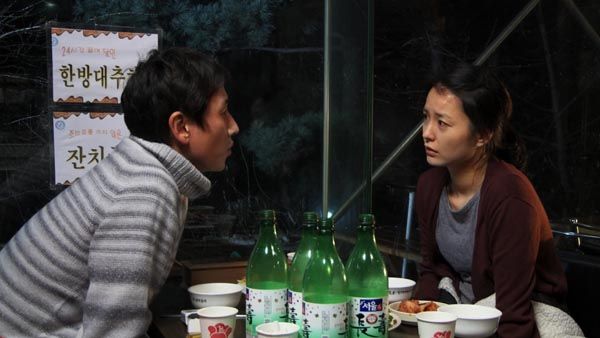
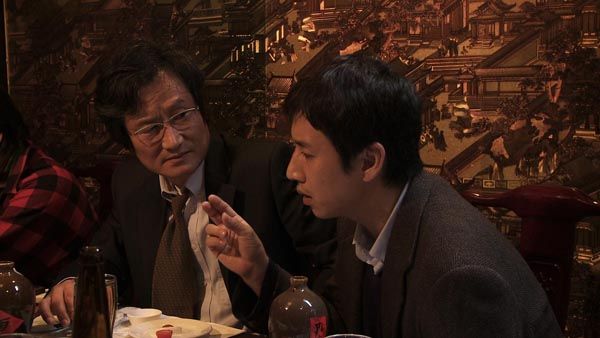
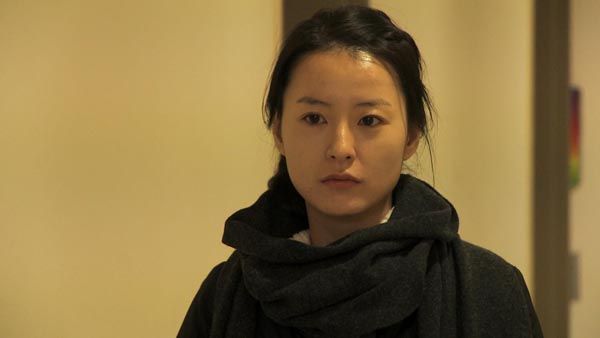
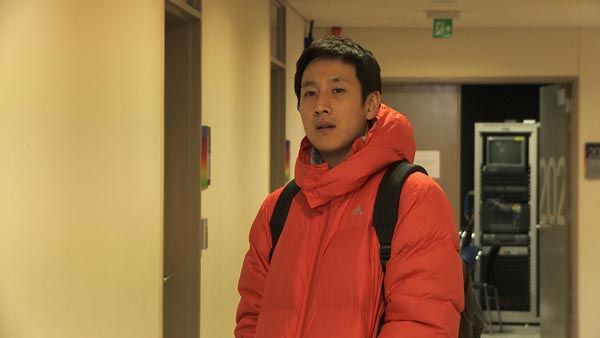
Lee Seon-kyun (Pasta) and Jung Yumi (Que Sera Sera) are starring in a film together, called Oki’s Movie. It comes from director Hong Sang-soo, who won a prize at Cannes earlier this year for his film Ha Ha Ha.
This film is invited to the 67th Venice International Film Festival, into its competitive “Orizzonti” section. According to the festival, it is “the Venice International Film Festival’s most innovative section, a veritable documentary array of contemporary cinema in all its forms of expression.”
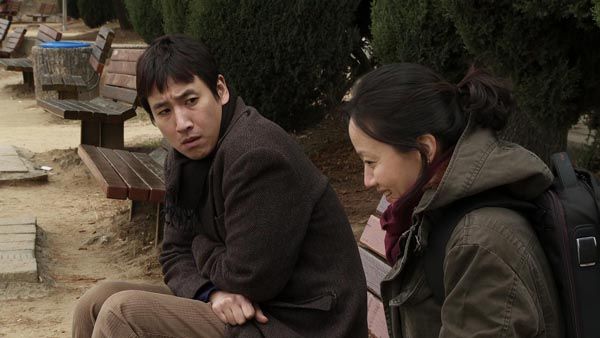
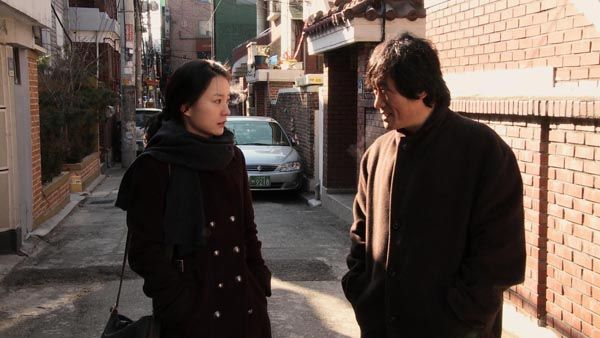
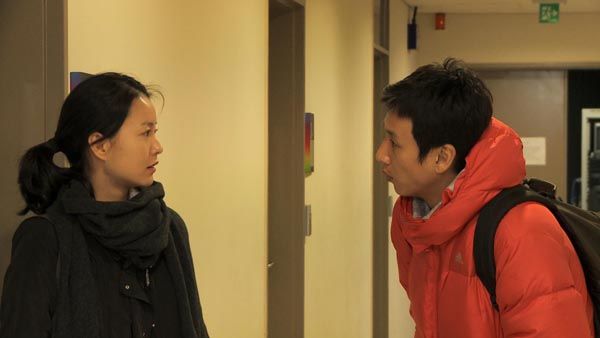
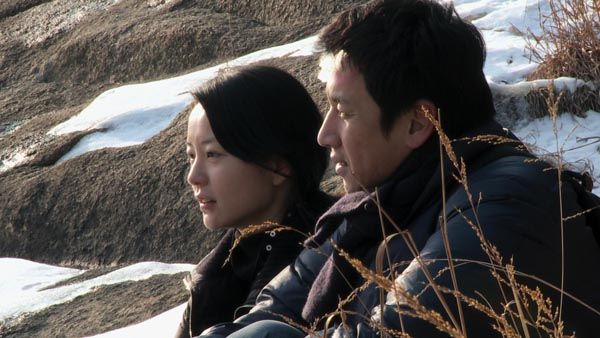
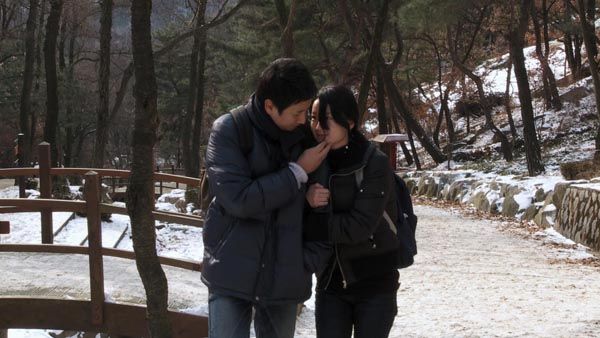
The movie stars Jung Yumi as the titular Oki (more traditionally spelled Ok-hee), an ordinary film student. Her classmate Jin-gu (Lee Seon-kyun) likes her and confesses his feelings for her in one of the stills below (he follows her all the way up the mountainside and gets drunk on makgulli), but her response is a vague “Thank you so liking me so much.”
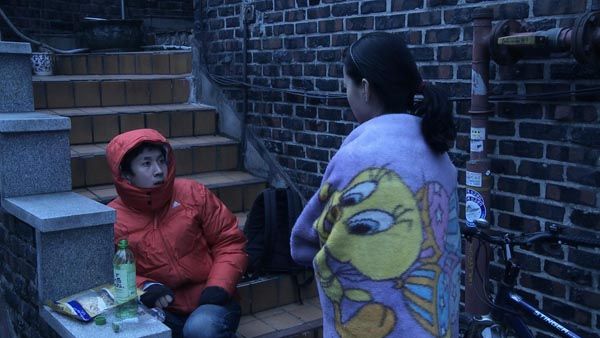
Jin-gu decides to try again at Christmas dinner and waits outside her place, but she doesn’t show up till dawn. Finding that he has spent the night there, she scolds him for waiting all this while.
Oki’s Movie is scheduled to release in Korea on September 16.
Source
Wednesday, September 4, 2013
Malala Inaugurates Europe's Biggest Library


The 16-year-old, flown from Pakistan to the UK for emergency treatment in October after being shot in the head by a Taliban gunman, told a 1,000-strong crowd outside the library that even "one book, one pen, one child and one teacher can change the world".
"We must speak up for the children of Pakistan, India and Afghanistan who are suffering from terrorism, poverty, child labour and child trafficking," she said. "Let us help them through our voice, action and charity. Lets us help them to read books and go to school."
Listen, watch, read more here.
List of "Korean Food" or HANSHIK that is HALAL in Korea

I thought I should put up a list of Korean food or Hanshik (한식) that Muslims in particular can eat at "any restaurant" across the length and breadth of South Korea. This list includes dishes that are served with seafood in it or are simply composed of rice and vegetables or noodles and vegetables. By the way, just to be on the safe side you can tell restaurant manager that: Gogi um-mou-go yeo! (I don't eat meat/ 저는 고기 안 먹어요).
You do not have to look around the halal food restaurants because it is obviously difficult. NOT all neighborhoods offers halal food . It's better that you stick to Korean food that falls within the confines of halal food and there is plenty to choose from. I've short-listed Zen Kimchi's list here and have made some additions as well.
Korea Tourism website has a very informative page on Korean food so check that out here.
Main Dishes being served in a Korean Restaurant
Buddhist Temple Cuisine (entirely vegetarian)
Jeon (Pancake) or Pajeon (Green Onion Pancake)
Yachae Gimbap (Seaweed Rice Rolls)
Bibimbap (Mixed Rice and Vegetables)
O-jingo Bokkeum Bap (Spicy Squid Stew served with Rice)
Boribap (Mixed Barley Rice and Vegetables)
Sundubu Jjigae (Soft Tofu Stew)
Haemul Sundubu Jjigae
Juk (porridges of differnt kinds), Jeonbok Juk (Rice Porridge with Abalone)
Kimchi Jjim (Braised Kimchi with Tofu)
Lotteria’s Shrimp Burger
Lotteria's Squid Burger in spicy flavour
Sae-u Kang (Shrimp Flavored “Fries”)
Doenjang Jjigae (Fermented Bean Paste Stew)
Ddeokbokki (Chewy Rice Cakes in Spicy Sauce)
Mae-eunTang (Spicy Fish Soup)
Nakji Bokkeum (Stir-fried Baby Octopus, I got very sick eating this and then never ate it again.)
Dolsot Yachae Bibimbap (Mixed Rice and Vegetables in a Sizzling Stone Pot)
Dolsot Chamchi Bibimbap (Mixed rice with tuna and vegetables in a stone pot)
Saengseon Gui (Korean-style Grilled Fish served with rice ad side dishes)
Hui Mul (Korean style Sashimi)
Haemultang (Seafood Soup)
Naengmyeon (Chilled Noodles)
Side Dishes (Banchan), Desserts, Snacks or Drinks
Myeolchi Bokkeum (Stir-fried Anchovies)
Odeng/Eomuk (Street-side Fish Noodles)
Hoddeok (Stuffed Street-side Pastries)
Beondegi (Silkworm Larvae)
Golbaengi (Sea Snails)
Jangeo Gui (Grilled Eel)
Sae-u Sogeum Gui (Salt Grilled Shrimp)
Deodeok Root
BindaeDdeok (Mung Bean Pancake)
Ttuekim
Dotorimuk (Acorn Jelly)
Patbingsu (Shaved Ice and Red Bean Treat)
Gyeran Jjim (Steamed Egg)
Corn Ice Cream
Songpyeon (Stuffed Chewy Rice Cakes)
Shikhye (Sweet Rice Punch)
Any product with Green Tea in it
Baek Kimchi (White Cabbage Kimchi)
Mul Kimchi (Water Kimchi)
Oi Sobaegi (Stuffed Cucumber Kimchi)
Ggakdugi (Cubed Radish Kimchi)
Sae-u Jeot (Salted Tiny Shrimp)
Myeongran Jeot (Salted Pollack Roe)
Ssamjang (Mixed Soybean and Pepper Paste)
Yachae Ramyeon (Vegetable Ramen Noodles)
BungeoBbang (Goldfish-shaped Stuffed Pastry)
GeJang (Raw Fermented Crabs)
Friday, August 30, 2013
Four Korean Women Scale Trango Tower in Skardu

Four Korean women have returned to Skardu after scaling the Trango Tower (6,239 metres high), also called Nameless Tower.
According to Hamid Hussain, a representative of the expedition organisers, Mi Sun Chae, Mi Sun Han and Jin Ah Lee led by Jum Sook Kim began to climb the Trango Tower, a very large, pointed and rather symmetrical rock spire, on July 26 but had to return to the base camp on August 4 due to bad weather.
They left the rock spire on August 8 after the weather cleared and succeeded in reaching the summit on the August 12 morning.
Earlier in 2006, 20 Slovenian women had climbed the peak.
“We used the German route, the most challenging, to reach the summit,” Ms Kim told Dawn.
On average, all four Korean women have the 20 years rock climbing experience.
Ms Kim, 47, is a noted climbing instructor in Korea.
She began to climb rocks in 1989 and surmounted several peaks in the Alps, the US, Canada and India.
Also, Ms Kim won the first prize at Korean Sport Climbing Games in 1993 and the second prize at X-Games in 1999.
Mi Chae, 41, works at a shop in Korea.
She won the first prize at the Korean Ice Climbing Games in 2000, 2001 and 2002, and second at the Korean Aid Climbing Festival in 2007.
Until now, Ms Chae has scaled El Capitan at Yosemite National Park in the US, Mt McKinley in Alaska, Grand Jorasse in the Alps and Mt Fitzroy in Argentina.
Ms Han, 41, is a freelancer and climbing instructor.
She has won the first prize at the Korean Aid Climbing Games in 2010 and second at the Korean Ice Climbing Games in 2009 and 2011.
Ms Han has surmounted rocks in the area of Blue Mountains in Australia, El Capitan at Yosemite National Park in America, the central Peak of Paine Chile Pantagonia and Mt. Fitzroy in Argentina in, Mount Blanc and Aiguille du Midi in the Alps until now.Ms Lee, 38, is the youngest member of the expedition.
A nurse by profession, she began her climbing career in 1998 and won the first prize at the Korean Summer Dry Tooling Games in 2011, second at Korean Ice Climbing Games in 2008 and Korean Summer Dry Tooling Games in 2012, third at Korean Bouldering Games in 2005 and Korean Ice Climbing Games in 2006, and fourth at the Korean Sport Climbing Games in 2005.
The four climbers are carrying out charity work in Baltistan for the poor people.
“We are planning to send some clothes, shoes and other relief items to Pakistani poor people once a year. We hope that our project continue for a long time,” Ms Kim said.
Thursday, August 29, 2013

Malala Receives Children's Peace Prize

Malala's speech is here.
She got Tipperary International Peace Award.

America is about to bomb Syria...

I think that it's about time that they should stop thinking of themselves as world police.
We have seen the contribution of American forces in Iraq such as Abu Gharib and daily bombing till date and then Afghanistan, where the American are sitting on the same table with Taliban for dialogue after all these years and last but not the least, arming the rebels anywhere is dangerous such as in Libya or arming of Afghans during the Soviet invasion of Afghanistan in lste 70s...
Americans don't know how to unarm all these wild men.

Demonstrations are already being held all over the major US cities and in London. Two countries in favour of starting an all out war with syria.
Wednesday, August 28, 2013
Deadline for 2013 Video Contest about Korea Extended
Ministry of Foreign Affairs the Republic of Korea has extended the deadline for '2013 Video Contest about Korea.' We will accept applications until October 7, 2013. This contest is open to anyone of any age who is not of Korean descent. The prizes for the contest include a Korean brand car, a laptop PC, a tablet PC, a digital camera and an external hard drive.
Of the two titles, which are “My best Korean friend is…” and “My favorite Korean food is…,” applicants may select one to make a video of less than 3 minutes. The video may be made with any device, such as cell phone, digital camera, video camera, etc. Applicants may post their completed video on YouTube or any other legal website. Lastly, applicants need to fill out a simple application form and send the form along with the link to their video to vcon.mofa@gmail.com. You can download the application form from the website of the ROK Foreign Ministry.
☞ Download application form
Source: MOFAT
Sunday, August 25, 2013
World Rowing Championships in Chungju, Korea
 |
| source:google |
The World Rowing Championships (WRC) will begin today,Sunday, in Chungju, a quiet town in Korea’s central region which hopes the event will help raise its international profile as a tourist destination. Chungju is famous for Martial Arts Festival which is held every October.
The competition, which will continue through Sept. 1, will feature more than 2,000 athletes from 82 countries, making it the largest world championship ever.
 |
| Source |
The North Chungcheong Province town is only the second Asian city to host the rowing tournament, which took place in Kaizu, Japan, in 2005. The rowing course built on Tangeum Lake will also be used as the competition venue in next year’s Incheon Asian Games.

Pre-sale tickets have sold out. The opening ceremony scheduled for Saturday is expected to be attended by United Nations Secretary General Ban Ki-moon, a native of Chungju.
The municipal government spent around 67.2 billion won (about $60 million) to build state-of-the-art facilities at Tangeum Lake, including a 2.25-kilometer rowing course and a spectator stand capable of seating 1,100 people.
A floating, 1.4-kilometer concrete bridge was installed on the rowing course. The bridge is capable of holding broadcasting vans and other television equipment.
It remains to be seen whether the world championships will spark local interest in the sport, which barely registers with public consciousness.
Strong rowing nations include Britain, the United States, Canada, New Zealand and Australia, and the Korean presence has been close to anonymous.
Korean athletes in recent months have shown flashes of improvement.
The best thing about Chungju is its serene beauty, it's mountains, lake and rice peddys.
I loved to go to Chungju and witness the new hub of sports events in Korea, since I'm very keen in martial arts and Chungju is the World's Martial Arts mecca so what can you ask for more. Attractions that are worth a visit include Martial Arts Museum (MAM), Apple Museum and a couple of monastries. MAM show cast the history of all sorts of martial arts in Korea and beyond starting from Taekyyeon to Taekwondo and to Hapkido.

Chungju is famous for its apricots and apples. I will strongly recommend people to add Chongju in their itinerary while in Korea.
Friday, August 23, 2013
Sgt Robert Bales Trial vs. Bradley Manning
Robert Bales
BBC reported that Staff Sgt Robert Bales was making a case for why he should some day be released, during his sentencing hearing at a Washington state military base and for detail click here.
If you do NOT remember Bales then his crime was that he massacred 16 Afghan civilians in Kandahar in two diferent villages, many of his victims were women and children.
Since we know that life of people in Asia is cheap hence, for all the 15 people killed by Bales, the American government paid a total of $980,000 in condolence money to families over the incident. An Afghan man, Wazir, whose 11 family members were shot dead by Bales received $550,000 in condolence payments out of that$980,000.
Sentence of Bales: If he is sentenced to life with the possibility of parole, Sgt Bales could be eligible for release in 20 years.
My view: Possibility of the release of this jerk just scares the crap right out of me. BBC also reported that it's disputed whether he actually does feel remorse, playing a recording of a phone call in which an incarcerated Sgt Bales and his wife laugh as they discuss the case.
Bradley Manning
Manning was working as an intelligence analyst in Baghdad in 2010 when he gave WikiLeaks a trove of diplomatic cables and battlefield accounts that included a 2007 gunsight video of a U.S. Apache helicopter firing at suspected insurgents in Iraq, killing a dozen people including two Reuters news staff and injuring two children. (I could NOT see this entire footage, it's graphic).
But 35 years is far too long a sentence by any standard. …
However, if you just kill a couple of dozen people and get away with 20 years like in Bales case is beyond my comprehension. Culpable homicide is seemingly a lesser crime than leaking official documents that does include the US policy of killing innocent citizens in the name of collateral damage.
Manning is treated much more harshly than Robert Bales....unbelievable!!
Interview of Susan Bradley(Bradley's mom) is here.
Thursday, August 22, 2013
Thai PM in Pakistan: Wrong Focus in Pak Media
Dawn newspaper reported that Pakistan and Thailand have agreed to enhance defence cooperation, a joint statement issued by the two countries at the end of Thai Prime Minister Yingluck Shinawatra’s visit to Islamabad said.
Subscribe to:
Posts (Atom)


 Posts


 sarahinsouthkorea


